
The promise in this post's title is simple: eat food uncooked and the weight comes off easily. Part of that may come down to calories a label overstates. The other part is about dates, which can help or work against you depending on how you eat them.
Cooking changes how much energy you get from food
In 2011 a Harvard team led by Carmody tested how cooking changes the energy food gives, using mice (PubMed 22065771). Cooking substantially increased the energy the mice gained from meat, and their body mass went up in a way the researchers could not explain by differences in how much they ate or how active they were. For both meat and starch-rich tubers, cooking gave a bigger energy gain than pounding the food raw.
The authors added a point that matters to anyone counting calories. Food labels, they wrote, "systematically overestimate the caloric potential of poorly processed foods". In other words, the kcal figure printed for a raw food may be more than your body actually takes from it.
An earlier review by Carmody and Wrangham (PubMed 19732938) set out the reasons. Cooking raises the digestibility of starch and protein. It also brings effects that pounding and other non-heat methods do not easily achieve: fairly complete gelatinisation of starch, efficient denaturing of proteins and the killing of food-borne pathogens.
These are mouse experiments and an evolutionary review, not weight-loss trials in people. They suggest the label figure for a raw food may overstate what you get from it, but they do not tell you how much weight any one person will lose.
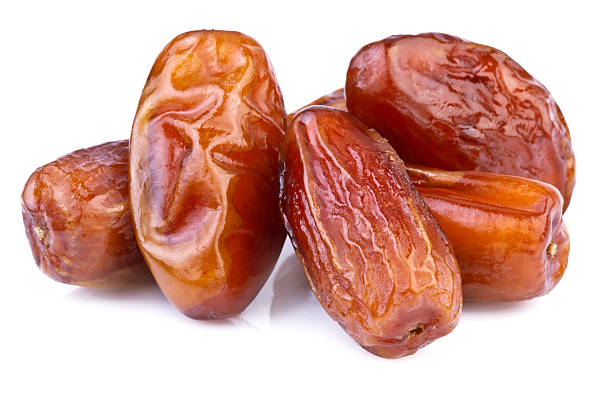
The date paste problem
The older version of this post described a raw chocolate cake bound together with Medjool dates, and recipes like that are where the NHS definition of sugar becomes useful. It says sugar in fruit is not counted as free sugar "unless the fruit is juiced or puréed", and the free sugars it tells you to cut down on include sugars in purées, smoothies and juices.
A date paste is puréed fruit. The NHS limit for adults is no more than 30g of free sugars a day, roughly seven sugar cubes. USDA FoodData Central gives Medjool dates 66.5g of total sugars per 100g, so about 45g of blended Medjool reaches that 30g on its own. One pitted Medjool weighs about 24g, which means fewer than two dates' worth of paste fills the whole day's allowance.
Whole dates are counted differently. The NHS says a 30g portion of dried fruit, naming dates in its list, counts as one of your 5 A Day, with the condition that it is eaten at mealtimes and not as a snack between meals, to reduce the impact on teeth. Blending is also why the NHS caps juice and smoothies at a combined 150ml a day: crushing fruit releases the sugars it contains.
What that means for a raw weight loss plan
The NHS explanation of calories is short. You are likely to lose weight if you eat and drink fewer calories than you use, and the average adult woman needs about 2,000kcal a day, the average man 2,500kcal. Dates are dense: 277 kcal per 100g for Medjool, or about 66 kcal for one date.
Put the two sections together and a practical rule appears. Eat dates whole, with a meal, and treat a blended date dessert like other foods high in free sugars, which the NHS says to eat only occasionally or not at all. The NHS tips page also sets a pace worth keeping, 0.5 to 1kg a week, and says not to lose weight suddenly with diets.

Ordering dates for raw recipes
Iran Date Fruit supplies dates to consumers, retailers and traders across Malaysia and delivers nationwide, as its about us page explains. Questions and orders go through WhatsApp, listed on the contact us page. Other date guides are on the Iran Date Fruit blog.
An earlier version of this page sent readers to an outside site to find more information and the link is kept for them.
General information only, not personal advice. Speak to your GP or a dietitian before a major change in diet.