
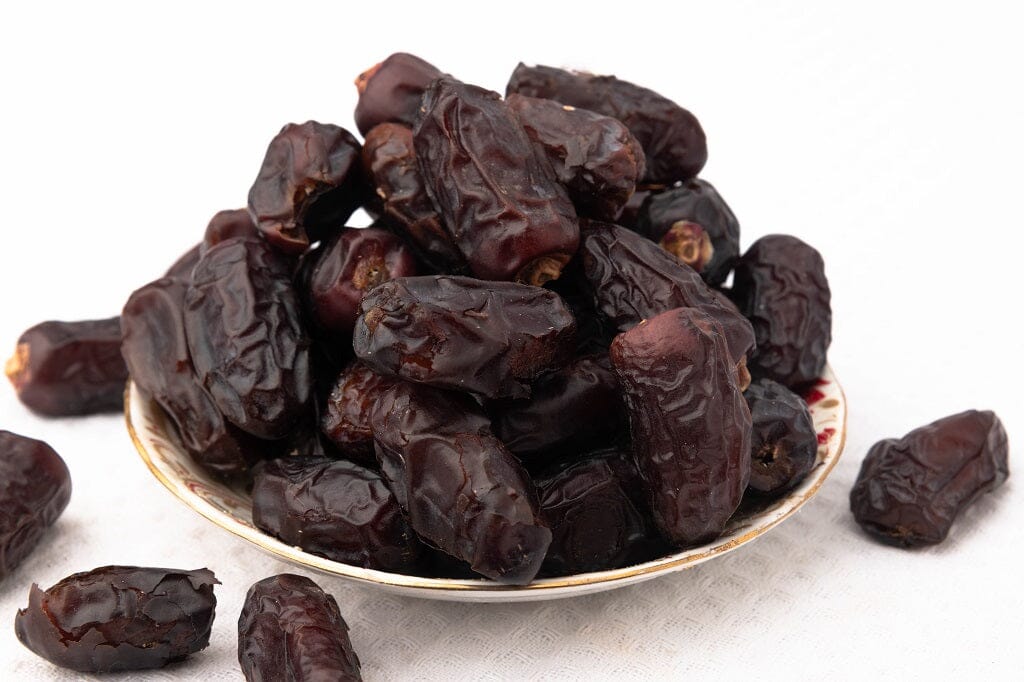
Safawi against the Iranian varieties most Malaysian buyers already know
Kurma Safawi Malaysia comes from Madinah, not Iran, which puts it in a different category from Mariami, Piarom, or Rotab Mozafati Bam — the varieties this market usually compares it to. Safawi is a fully-cured, shelf-stable date, unlike Iranian rotab, but its flesh stays thick and soft rather than drying out the way a cured date normally does — closer in mouthfeel to a rotab than to anything dried.
Taste and texture, side by side
Piarom is soft, dark, and almost fudge-like. Mariami runs sweeter and softer still. Safawi sits in the same soft, thick-fleshed territory as both, with a caramel-toffee flavour that's milder and less intensely sweet than Mariami's. Buyers used to the very soft Iranian stock won't find Safawi a different texture class — the difference is sweetness and origin, not firmness.
Why the price doesn't track Iranian date prices
Iranian variety pricing in Malaysia moves with the rial exchange rate and the Bam-region harvest. Safawi doesn't follow either of those, because it comes out of a completely separate country and supply chain — Saudi Arabia rather than Iran. A supplier's Safawi price can rise while their Piarom price holds steady, or the reverse, simply because the two aren't linked to the same currency, harvest, or shipping route.
Storage: the one habit that actually protects the flavour
Safawi's flesh stays soft and moist much like a rotab despite being a fully-cured date, so it reacts to heat and humidity the way a soft date does. Left uncovered at room temperature it dries out within a couple of weeks and loses the caramel note. Sealed in the fridge, the same box holds its texture for months. Buyers who treat it like a dried snack and leave it in an open bowl are the ones who end up disappointed with a "hard" Safawi that was actually just neglected after arrival.
Where quality actually gets decided
Sweetness makes its date enthusiasts favourite in the boxes, but consistency of size is what separates a good supplier from an average one. A seller able to deliver dates that meet customers' size expectations shipment after shipment has invested in sorting equipment or manual grading that a smaller operation skips. That's the detail worth asking about before you order in bulk, more than the marketing copy on the listing.
If you're deciding between Safawi and an Iranian variety
Buy Safawi for gifting and for buyers who want a soft, caramel-toffee date that isn't as intensely sweet as Mariami. Buy Piarom or Mariami if the recipient prefers a richer, sweeter toffee note. Price alone won't tell you which is the better fit — the two are answering different preferences, not competing on the same scale. A look at how local and imported kurma varieties stack up, or how taste and texture vary by wholesaler, is a more useful comparison than a straight RM-per-kg table.
The short version
Safawi is a Saudi, Madinah-grown date — soft and thick-fleshed like the Iranian varieties it's often stocked alongside, just milder and less intensely sweet. Its price moves with Saudi supply and demand, not the rial or the Bam harvest. Choose it for flavour and occasion, not because it's cheaper or dearer than a Piarom on a given week.