
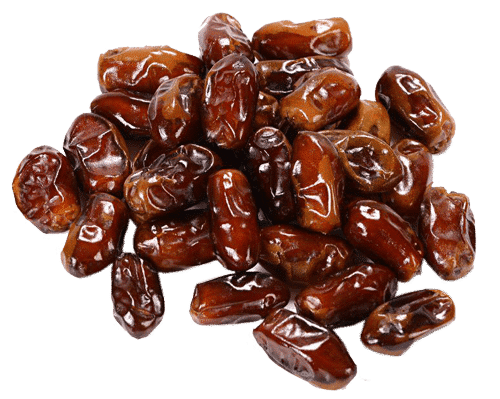
Search for Jenis2 Kurma and you get long lists of variety names. Iranian dates are where those lists get confusing. One date can be sold under two or three names, and some words on a listing describe a place or a stage of ripeness rather than a variety. If you are thinking of ordering Iranian dates online, learning to read the name on the listing does most of the work. The photo helps less than you would expect.
One date, several names
Sayer is the clearest example. It is also sold as Stamaran, Samaran or Sambarun. Green Diamond's guide to Iranian varieties puts it at about 80% of the date palms in Khuzestan province and describes it as a semi-moist date that stores and exports well, which is why it turns up so often in bulk listings. Our notes on Iranian Sayer dates go further into this one.
Mazafati is also called Kimia. Zahedi is sometimes listed as Zahidi or Ghasb. Shahani, a sweet brown date grown in Fars, changes its name from one town to the next. If two shops seem to sell different dates at very different prices, check first that they are not selling the same date under two names.
Words on the label that are not varieties
"Rotab" is a stage of ripeness: the soft, wet stage when a date is eaten fresh. "Bam" is a place, an area in southeast Iran known for Mazafati. So a pack labelled Rotab Mazafati Bam tells you the variety, the ripeness and where it was grown. All three point the same way. Expect a near-black, very soft date with thin, shiny skin, usually kept chilled.
Mariami and Piarom cause a different mix-up. Both are long, brown, fleshy Iranian dates, and some sellers use the two names loosely. Green Diamond describes Mariami as soft, golden-brown to dark, with a caramel-like sweetness, and Piarom as semi-dry with low moisture. If texture matters to you, ask which one is actually in the box.
What the name tells you about delivery
Once you know the variety, you know roughly how it will cope with a few days in a courier van. Iranian dates run from wet to dry:
- Mazafati sold as rotab is the wettest. Its moisture ranges from about 15% to 35% depending on when and where it was picked, and it is normally kept chilled or frozen. Ask how the seller ships it before you pay.
- Mariami and Kabkab are soft dates. A sealed tub or a vacuum pack is worth insisting on.
- Sayer sits in the middle and travels well, which is part of why exporters like it.
- Piarom and Zahedi are at the semi-dry and dry end. They are the easiest to send by post.
Should you buy them online, then?
Usually, yes. There are numerous types of dates to choose from, and an online shop lets you compare several Iranian varieties side by side, which a single kedai rarely can. When purchasing dates online, read what earlier buyers say about how the dates arrived, not only whether they liked the taste.
Before you order, send the seller a few questions:
- Which variety is this, by its usual name? "Kurma Iran premium" is not a variety.
- Is it sold fresh as rotab, or at the dried stage?
- How is it packed, and is a soft date sealed?
- What does the grade on the listing mean?
That last one matters. For Mariami, grade mostly reflects size and how even the fruit is, so a higher grade gets you bigger, more uniform dates rather than a different taste. Our piece on how dates are graded and priced in Malaysia covers this in more detail.
When the box arrives
Put rotab Mazafati straight into the fridge or freezer. Move Mariami into an airtight container and refrigerate what you will not finish soon. Sayer, Piarom and Zahedi are fine in a closed container somewhere cool and dry. If you have more Mariami than you can snack through, there are ways to use Mariami AA in cooking.
A seller who answered your questions plainly before you paid is usually the one to go back to for fresh and high-quality dates.