
Where these dates actually come from
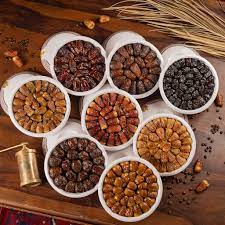
"Kurma importir" means the businesses that bring dates into Malaysia in the first place, before any shop puts a label on a box. A lot of that supply traces back to Iran's date belt around Kerman, Bam, and Jahrom, where Kurma Importir sources several of the varieties that end up on Malaysian shelves. Mazafati travels as a soft, near-black date in cold-chain packing because it doesn't dry well. Piarom and Mariami are lower-moisture and tolerate ambient shipping better, which is part of why they're more common in loose retail bins.
Why the variety matters before the numbers do
Every date sold under "kurma importir" isn't the same fruit. Zahedi is drier and cheaper, often blended into mixed boxes. Mazafati and Piarom sit at a higher price point because of the extra handling they need in transit. An importer who mixes these without saying so on the label is the reason two boxes of "dates" from two different sellers can taste, and cost, so differently.
The composition numbers, without the marketing gloss
Set the variety aside and look at what's actually in a date. A single date runs roughly 20 to 70 calories depending on size and variety. A 100-gram serving carries about 75 grams of carbohydrate and around 7 grams of fibre, close to a quarter of a typical daily target. Protein and fat are minor — about 2 grams of protein and under 1 gram of fat per 100 grams. None of that changes by import route; it's the fruit, not the paperwork.
Vitamins and minerals present in the fruit
Dates carry vitamin B6, niacin, pantothenic acid, and vitamin K, plus potassium, magnesium, and copper. That's a straightforward nutrient list, not a treatment plan — worth knowing what's in the box, not a reason to buy dates instead of seeing a doctor for anything.
What happens before the crate leaves the warehouse
A reasonable importer checks moisture and sugar crystallisation on arrival, sorts out damaged fruit, and holds stock in temperature-controlled storage rather than a hot loading bay. Dates that sit around in poor packaging pick up moisture, ferment faster, and lose the texture buyers are paying for — that's a bigger driver of quality than which country they left from.
Buying a handful versus buying a case
Most households only need a modest quantity at a time rather than a full case, and dates keep better in a sealed container in the fridge than left out in the original box. Buying loose from a supplier who turns over stock quickly usually beats a large box that sits half-finished in a cupboard for months. Ask which region the batch came from and how long it's been in storage — that tells you more than any package claim will.