
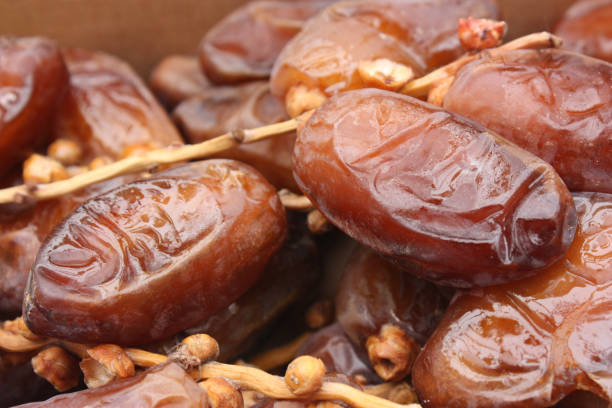
Kurma tangkai means dates that arrive still attached to the stem — the tangkai — instead of stripped loose into a tub. It's the same fruit as any other date, just packed closer to how it grew on the palm. In Malaysia the format sells hardest around Ramadan, and that has more to do with how it looks on a table than any difference in the dates themselves.
What tangkai actually is
Loose dates get pulled off the bunch, sorted by size, and packed flat before they reach a shop. Tangkai skips that sorting step — the stalk stays intact, dates hang from it in small clusters, and the box or tray is built around that shape rather than a stack. Sellers offering kurma tangkai most often stock it in Deglet Noor and some Mariami lots, since both hold their skin well enough to survive transport on the stem without splitting.
Handling the stem costs more room per kilogram than loose fruit, and it takes an extra pair of hands to pack without bruising the cluster. That's most of why tangkai usually costs a bit more than the same variety sold loose — not a different grade of fruit, just a different amount of labour to get it to the shelf intact.
Why demand spikes in Ramadan
A stem of dates does more visual work at a buka puasa table than a plastic container ever will. Families buying for open houses, or as a gift to bring when visiting relatives, tend to pick tangkai first — it reads as effort, even though the fruit inside is identical to what's sold loose two shelves over.
That surge is entirely seasonal. Suppliers can't summon extra tangkai stock the week Ramadan starts — the fruit is grown and packed on Iran's harvest calendar, which has no reason to line up with the Malaysian fasting month. Whatever a dates supplier has on hand for Ramadan was bought and shipped months earlier. Order tangkai late in the season and the choice narrows fast, because there's no quick way to top up mid-Ramadan.
What actually differs, bunch to bunch
Weight is not fixed the way a 500g pack is. One tangkai might carry twelve dates, another twenty, so price is usually set per kilogram rather than per piece — worth checking before comparing two sellers' prices side by side. The stem itself should be dry and a light brown, not sticky or darkened near the base; a tacky stalk usually means the bunch sat somewhere too warm before it reached the shop.
Storage is less forgiving than loose dates too. More of the fruit's surface is exposed to air on a bunch, so tangkai dries out or softens faster once it's out of the packaging. Keep it in a sealed container in a cool spot and eat through it within a week or two rather than treating it as a pantry stock the way you might with vacuum-packed loose dates.
Choosing between tangkai and other formats
If the dates are going straight into a bowl for the family, loose or boxed fruit like Kurma Mariami AA keeps better and costs less per kilogram. Tangkai earns its place when presentation matters — hantaran, a guest table, a gift box — and the buyer is willing to pay for the stem along with the fruit. Either way, grading still follows the same system across formats; a look at how date prices and grading work in Malaysia explains why two bunches of the same variety can still be priced apart. For everything else on the shelf, the homepage lists what's currently in stock.