
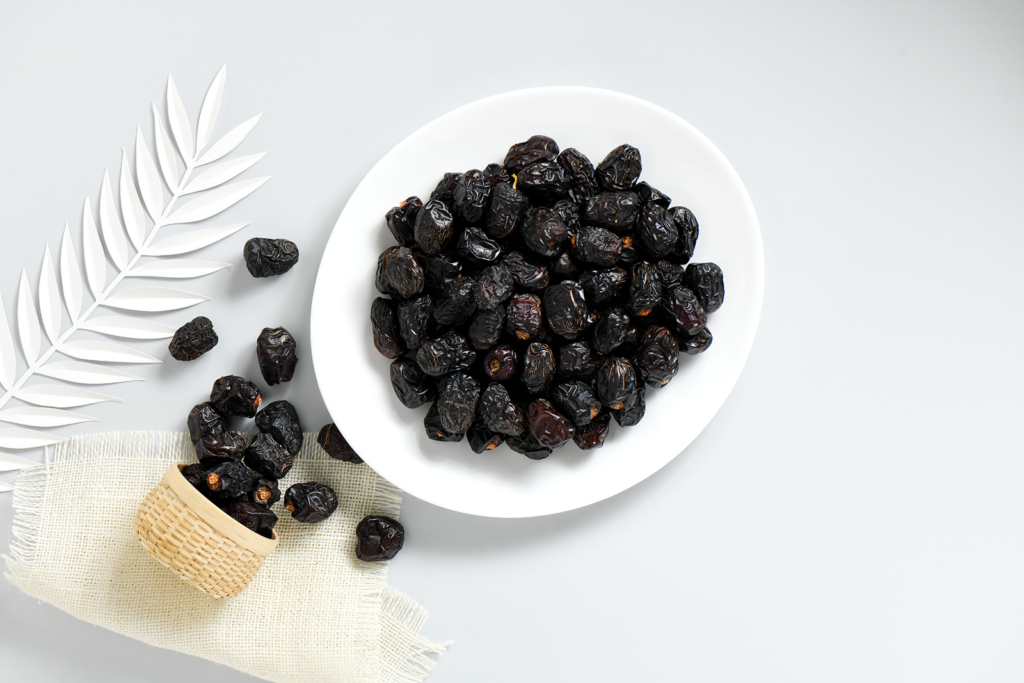
Kurma Nabi isn't grown in Iran: here's what it actually is
Shoppers browsing Kurma Nabi listings sometimes assume it's just another Iranian date, given how many Iranian varieties fill the same shelf. It isn't. Kurma Nabi is the market name for Ajwa, grown specifically around Madinah in Saudi Arabia. Iran's own dark-grade dates (Mazafati, Piarom, Zahedi) are a separate category, grown in Kerman and Sistan-Baluchestan provinces with a different climate and soil profile.
Why the distinction matters when you're buying
Both categories look similar on a shelf: small, dark, dense. Sellers occasionally blend Kurma Nabi with Iranian Mazafati or pass one off as the other. The two are not interchangeable in taste: Mazafati is moister and softer with a lighter, less caramelised flavour, while genuine Madinah Ajwa is drier and denser with a deeper, almost smoky sweetness. If a listing calls itself Kurma Nabi but the price sits close to standard Mazafati, ask for the country-of-origin documentation before you commit to a bulk order.
Reading a supplier's stock sheet
Serious wholesalers list origin, harvest year and grade separately from the variety name. A stock sheet showing "Kurma Nabi, Madinah, 2024 harvest, Grade A" is worth trusting more than a generic "Ajwa dates" line with no origin field. For Iranian stock specifically, ask which province the batch came from. Bam in Kerman is the benchmark region for Mazafati quality, the way Madinah is for Ajwa.
Storage and shelf life
Both categories keep well refrigerated, but Iranian Mazafati has higher natural moisture and spoils faster at room temperature, usually within a couple of weeks unpacked, versus a month or more for drier Madinah Ajwa. If you're importing mixed pallets, keep the two separated in cold storage rather than stacking them together, since the moister stock will shorten the shelf life of anything packed next to it.
The Ramadan demand spike
Demand for dark, dense dates rises sharply ahead of Ramadan across Southeast Asia, and buyers stock up on whichever variety their regular supplier can move fastest: Kurma Nabi, Mazafati, or both. Breaking the fast with a date is common practice across the Muslim world regardless of which variety is on the table, and it's a big part of why prices for both categories climb in the weeks before the fasting month. Malaysian buyers in particular exchange dates as a gesture of goodwill during this period, which pushes gifting-pack volume up alongside bulk wholesale orders.
Sourcing tips for bulk buyers
If your business regularly imports both categories, lock in Kurma Nabi contracts early. Madinah supply is tighter and price swings are sharper closer to Ramadan than for Iranian stock, which has a longer harvest window. For current Malaysian pricing patterns across grades, our date pricing and grading guide breaks down how local wholesalers set tiers, and our wholesale Ajwa sourcing guide covers what to check before placing a first order with a new Madinah supplier.