
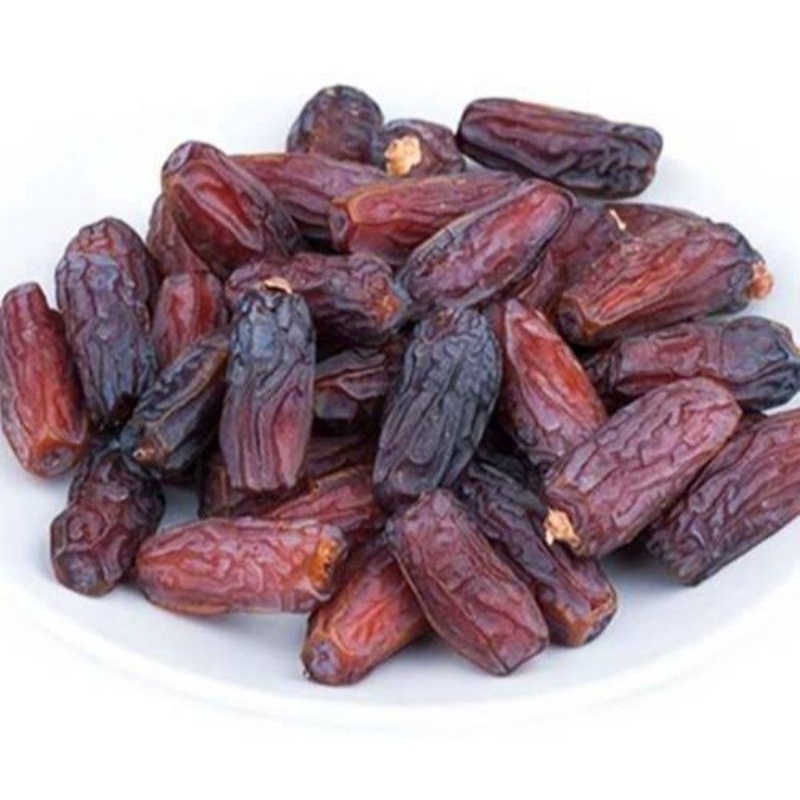
Fresh dates and dried dates are not two different products. They are the same fruit at two different points on a drying curve, and that single variable — moisture — explains most of what separates buah kurma sold soft and dark from the firmer, shelf-stable kind stacked at room temperature in a Malaysian pasar.
Moisture is the whole story
A freshly harvested date can hold over 40% water. Left to dry — naturally in the sun or in a controlled kiln — that drops to somewhere between 10% and 20%. Iranian Mazafati is the clearest example on the wholesale side: it is processed semi-dried on purpose, usually sitting around 20-30% moisture, which is why it stays dark, soft and faintly sticky rather than firm. Zahedi is dried further and keeps for months at room temperature without refrigeration. Neither processing method is "better" than the other. They are made for different jobs.
Why it matters more to a buyer than an eater
For a home cook, the difference is mostly texture and sweetness — a drier date tastes more concentrated because the sugars aren't diluted by water. For anyone sourcing in bulk, it becomes a logistics and cost question. Higher-moisture stock needs a cold chain and a shorter sell-through window before quality drops. Lower-moisture stock tolerates ambient shipping and sits on a shelf far longer, which is usually why it lands cheaper per kilo by the time it reaches a Malaysian warehouse.
What to check before you commit to a shipment
Ask for the moisture percentage on the spec sheet rather than relying on a photo — colour alone is a poor guide, since curing and light exposure can darken a batch that is actually on the drier side. Squeeze-test a sample if you can get one: it should give slightly under thumb pressure without leaving a wet residue. And confirm the harvest date, not just the ship date — dates that sat in ambient storage for months before export behave differently in transit than ones moved soon after drying.
Matching the stock to the use case
Semi-dried varieties suit snacking, gifting, and anywhere the fruit is eaten as-is, since the softer bite and rounder sweetness read as fresher. Firmer, lower-moisture stock is the better call for baking, date paste, or long-haul retail distribution where shelf life outweighs texture. If you're weighing that trade-off for a specific order, our grading and pricing breakdown lays out how Malaysian suppliers price each tier, and our note on Medjool ripeness stages covers the same moisture logic for a different origin. Either way, the question isn't whether fresh or dried dates are objectively better — it's which one matches what you're actually going to do with the box once it clears customs.
Sourcing at scale
If you're placing a standing order rather than a one-off buy, moisture consistency batch-to-batch matters more than any single sample tasting good. A supplier who can quote the same moisture range on every shipment is worth more than one quoting a marginally lower price with no spec sheet at all — see our guide on choosing a dates wholesaler in Malaysia for what else to check before signing a standing order.