
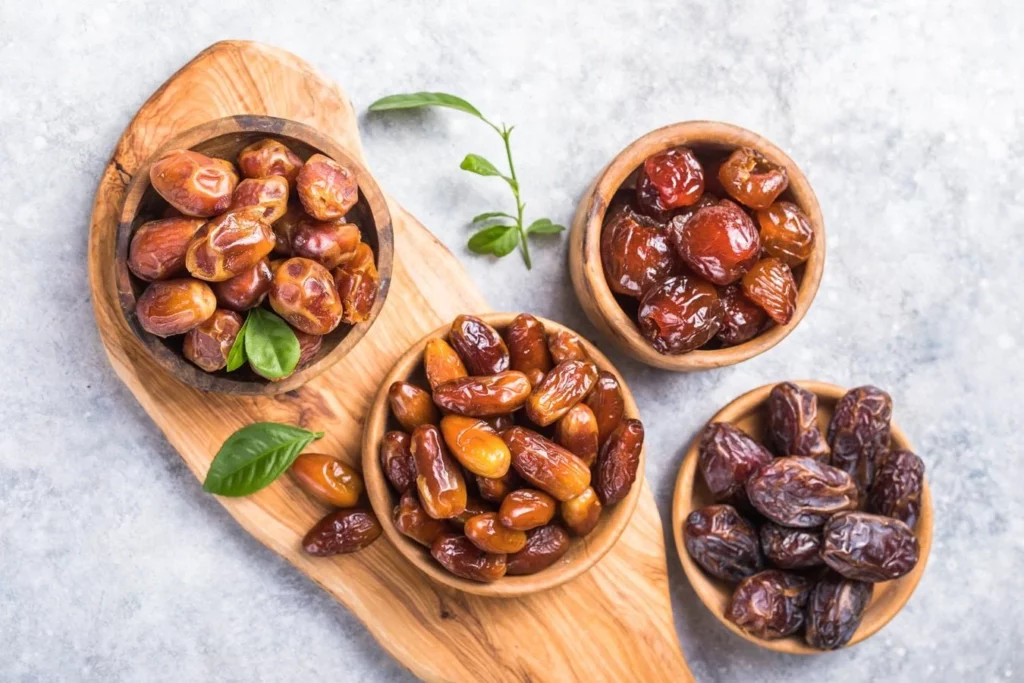
Dates are mostly sugar, and that is not a criticism. A dried Medjool is roughly 66-70% natural sugar by weight - fructose and glucose in close to equal parts - which is exactly why one date fills an afternoon energy gap faster than a granola bar loaded with processed syrup. The difference between a date and a candy bar isn't the sugar content. It's what comes with it.
Each date also carries 1.5-2g of fibre, a run of potassium and magnesium, and a chewy, fibrous structure that slows how fast the sugar hits your bloodstream. That's the whole story of why Kurma Malaysia shoppers reach for dates before a workout or a long meeting instead of a sugary drink - not magic, just fibre doing its job.
What actually happens when you eat one
Fructose and glucose enter the bloodstream at different rates, and the fibre wrapped around them slows both down further. That's why the standard advice from nutritionists is "steadier" rather than "instant" - three to four dates spread over an hour will carry you longer than one sugary drink, which spikes and drops inside twenty minutes. This isn't a cure for anything. It's simple carbohydrate chemistry, and it's why dates sit next to bananas and oats on most pre-exercise snack lists.
Which variety, and why it matters
Not every date behaves the same on the shelf or on the palate. Ajwa, grown around Madinah, is dense and almost fudge-like - a small one is enough to feel satisfying, which matters if you're watching portion size. Safawi is drier and firmer, closer to a raisin in texture, and keeps well at room temperature for weeks without turning sticky. Medjool, usually from Palestine or Jordan, is the softest and largest of the three, closer to a caramel in mouthfeel, and is the one most people hand out as a gift because it looks the part. If energy snacking is the goal rather than gifting, Safawi or a mid-grade Ajwa go further per ringgit than Medjool, which is priced for size and presentation.
Buying for freshness, not just brand
A date that's been sitting too long dries out at the edges and turns from chewy to leathery - that's a storage problem, not a quality defect, but it changes how the sugars release. Look for dates that are glossy rather than dusty, and ask your supplier when the stock was last rotated. Vacuum-sealed packs keep the moisture content stable far longer than open bins, which matters more in Malaysia's humidity than most buyers realise. If you're buying in bulk for an office or a gym bag stash, smaller 250g-500g resealable packs waste less than a 5kg box that goes stale before you finish it.
A plain way to use them
Stuff a pitted date with a few almonds and you've got a two-ingredient snack that travels without melting or crushing. Chopped into oats or blended into a smoothie, dates replace the sugar most recipes call for without an artificial aftertaste. None of this requires a "superfood" label - it's just what a dense, fibre-rich fruit does when you swap it in for refined sugar.
For the economics behind what you're paying for - grading, harvest timing, and why prices swing by variety and season - see our piece on how technology is reshaping date palm cultivation. If you want the nutrition breakdown in more depth, we cover it separately in our nutritional value guide, and for a side-by-side of Medjool's texture against other imports, see Medjool dates from Palestine. Buyers sourcing in volume may also want our wholesaler comparison before committing to a grade.